
Build the Right Early Retirement Withdrawal Strategy
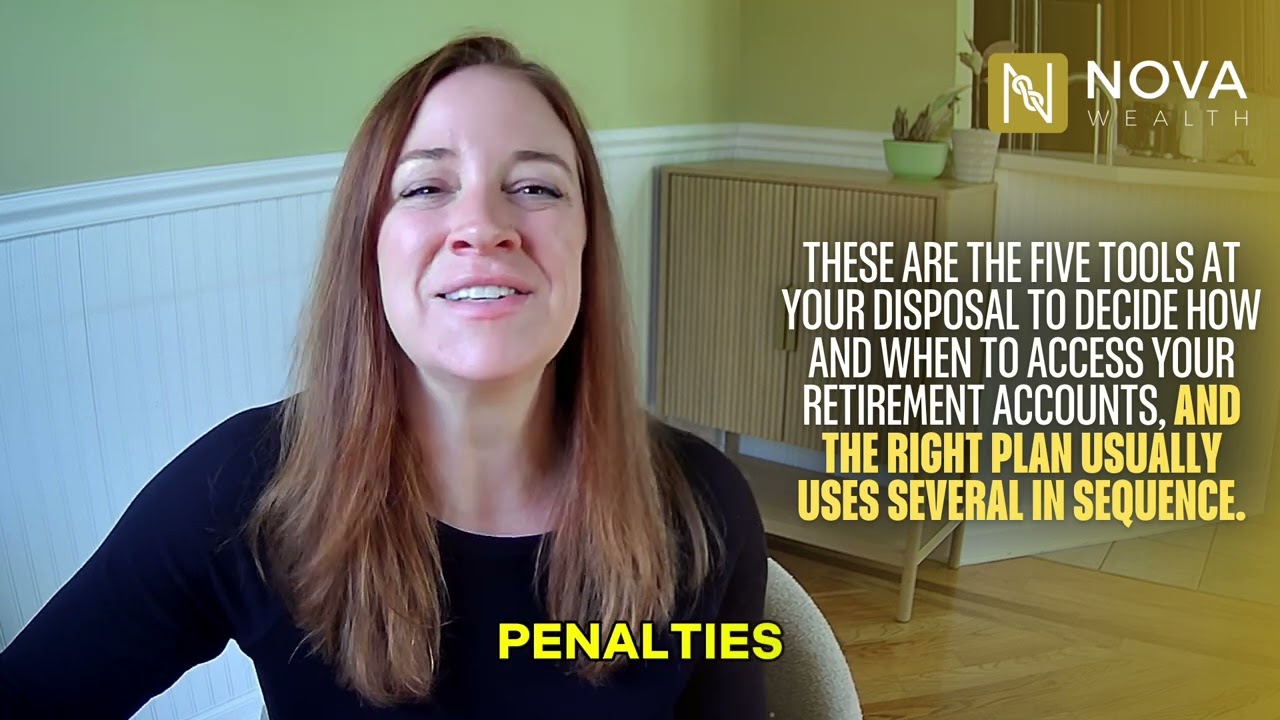
There are five primary tools that may help you decide how and when to access retirement accounts before age 59½. The strongest early retirement plan usually combines several of these strategies in a deliberate sequence rather than relying on a single withdrawal method.
Use the Rule of 55 for Your Current 401(k)
The Rule of 55 may allow you to take penalty-free withdrawals from your most recent employer’s 401(k) if you leave that job during or after the calendar year in which you turn 55 and the plan permits withdrawals.
This exception generally does not apply to 401(k) accounts held with previous employers or to IRA assets, so confirming the specific rules of your employer-sponsored plan is essential.
Consider 72(t) or SEPP Distributions
A 72(t) strategy, also known as substantially equal periodic payments or SEPP, can provide access to IRA funds before age 59½ without the standard early withdrawal penalty.
However, the strategy requires you to follow a fixed distribution schedule for a specific period. Changing or stopping the payments too early can cause previous penalties to be applied retroactively. It can be a powerful retirement income tool, but the details must be handled carefully.
Access Roth IRA Contributions
The money you contributed directly to a Roth IRA, not the investment earnings, can generally be withdrawn at any time without taxes or an early withdrawal penalty.
This can provide a flexible source of income during early retirement, especially for people who have built up Roth IRA contributions over several years but have not considered using them as part of their withdrawal strategy.
Spend From Taxable Accounts and Cash
Using cash reserves and taxable brokerage accounts before withdrawing from traditional retirement accounts may help you avoid early withdrawal penalties and keep your reported taxable income lower.
Maintaining a lower income can also be important when managing Affordable Care Act healthcare subsidies during the years before Medicare eligibility.
Use Low-Income Years for Roth Conversions
The years after leaving work may create an opportunity to convert money from a traditional IRA or eligible 401(k) into a Roth account while remaining within lower tax brackets.
You pay income tax on the converted amount now, but the strategy may reduce future taxable withdrawals and required minimum distributions. Roth conversions can be particularly valuable when completed strategically during lower-income retirement years.
Why the Withdrawal Sequence Matters?
The order in which you use cash, taxable investments, Roth contributions, retirement accounts, and Roth conversions can significantly affect your financial outcome.
Your withdrawal sequence may influence your current taxes, ACA subsidies, future Medicare premiums, and the longevity of your retirement portfolio. That is why early retirement access should be approached as a coordinated checklist rather than a single financial move.
If this is your first time with me, I’m Elizabeth.
• I help women navigate taking over the finances after widowed, divorce or illness
• I help people comfortably retire 10 years early
• We provide sustainable, predictable income in retirement
• $200 million and thousands trust us with their retirement planning (as of 8/1/2026)
• Book an intro call. https://calendly.com/nova-wealth-intro/novawealthintro
• Join the Second Half. https://retirenova.com/resources


